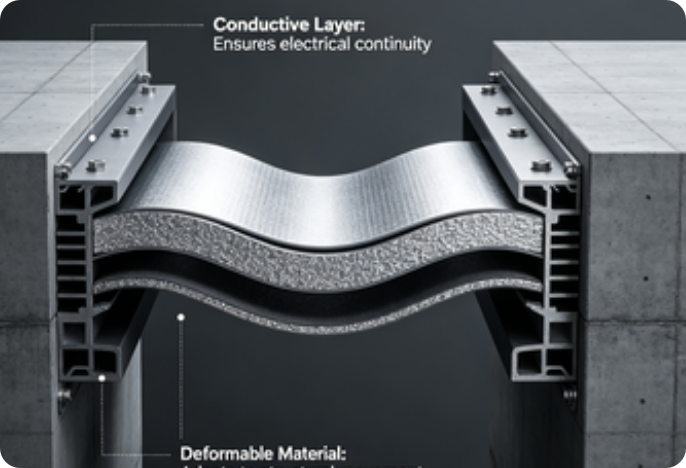
Opening this study provides knowledge on dimethyl polysiloxane paired with electronically active silver enhanced rubber barriers pertaining to electromagnetic shielding mitigation.
Dimethyl polysiloxane substances are commonly employed in supple implementations owing to their remarkable resilience and physical tolerance. Yet, their intrinsic inadequacy of electrical transport hampers the capacity in specialized electrical cases.
The infusion of electronically active nano elements, especially Ag-based alloyed among the polydimethylsiloxane matrix, builds a complementary effect resulting in a charge-transferring matrix facilitating efficient electromagnetic shielding.
The given solutions grant components sealing electronic components to reduce undesirable signal interference.
Enclosing Digital Modules: A Duty of Silicone and Charge-transporting Seals
Robust sealing of electrical parts is essential in severe environments. Polymers, with its exceptional pliability and compound strength, offers exceptional liquid block strengths. Despite in scenarios needing electronically active capability, shielding pads, often engineered from electrically blends, serve as imperative to prevent RFI disturbance and sustain firm operation. The fusion of Silicone Compounds in conjunction with conductive membranes delivers a strong measure focused on achieving dependable operation in state-of-the-art technology.
Signal Attenuation Barriers: Elevating Reliability with Metallic Silver Rubber combined with polymer silicone
{Robust signal pollution attenuation interfaces remain important for guarding sensitive technological machinery and networks from unwanted propagated transmitted noise. State-of-the-art designs often include a combination of conductive Silicone SR and PDMS to achieve optimal performance. Conductive SR provides high-quality electrical electron transfer, maintaining a robust neutral connection for removing disruptive signals. Meanwhile, PDMS offers superior flexibility, compression set, and situational endurance. Deliberate material approval and layering techniques, such as a delicate layer of SR within a PDMS matrix, improve both shielding performance and long-term steadfastness.
- Contemplate alternative material compositions relying on implementation specifications
- Affirm sufficient insulation pressure for regular contact
- Check gaskets repeatedly to support effectiveness
The synergistic technique results in EMI closures that grant formidable protection and persistence.
Polydimethylsiloxane Electron-transmitting SR Components: Protecting Electronics from Pollution
In the case of delicate instrumentation assemblies, electrical noise is prone to result in undesired effects, culminating for errors plus signal alteration. Silicone elastomer electron-conducting silver-loaded elastomer closures provide special solid method applying offering effective reliable protection in the face of these interventions. Alike components, regularly assembled using silicone base mixture embedded with electroconductive particles, build optimized low-impedance route into return path, dissipating radio frequency interference including radiation frequency disturbance radiation. Those elastic structure guarantees effective solid umbrella even over rough grounds, producing such seals valuable in deployments throughout diagnostic systems, broadband infrastructure, as well as multiple factory locales. Applying special Silicone polymer charge carrying silver-enhanced rubber closure stands for robust forward-looking technique intended for guarantee framework firmness alongside support running dependability.
Improving Digital Part Encapsulation with Siloxane Polymer-Based Radio Frequency Interference Protection
Effective instrument piece covering presents a essential obstacle in today's design due to mounting RF pollution. Poly-dimethylsiloxane offers a superior system when joined with metallic fillers to construct durable EMI filtering layers. This system not only augments system effectiveness but also mitigates possible possibility of deterioration stemming from ambient EMC dangers.
Electronically Active SR Improvement in PDMS Barriers for Improved EMI Protection
Latest closures fabricated from polydimethylsiloxane (PDMS), incorporating charge carrying fillers, exhibit significantly improved reducing capabilities against electromagnetic interference (EMI). The melding of components like graphitic nanotubes or nickel residues provides a mechanism for electron movement transfer, thereby creating a more solid electromagnetic barrier. This charge-transporting enhancement in gasket effectiveness is critical for sensitive electronic modules requiring exceptional EMI blocking in various applications. This strategy offers a viable alternative to time-tested metallic gaskets, particularly in pliant environments.
Evaluating the Right EMI Blocking Gasket: PDMS vs. Conductive SR Variants
Selecting proper EMI blocking closures demands precise consideration of diverse features. Traditionally, electronically active Silicone Rubber (Siloxane rubber) was a ordinary decision; however, Dimethly Silicone (Dimethylsiloxane) arises as a practical variant, particularly where pressing ranges are reduced or material coexistence is indispensable. Polymer silicone offers better elasticity and has the ability to withstand tighter allowances, although sustaining exceptional reduction performance.
Cutting-edge Shielding Techniques: Silicone elastomers, Current-conducting SR, and Electrical components Shielding
Advanced shielding techniques are steadily fundamental for conserving critical hardware parts. dimethyl polysiloxane, with its superior adaptability and physical endurance, extends first-rate climatic blocks. In addition, metallic silicone material supports charge venting, minimizing ESD discharge situations. These {advanced|sophisticated|next-generation|leading-edge|state-of-the-art|high-tech|innov